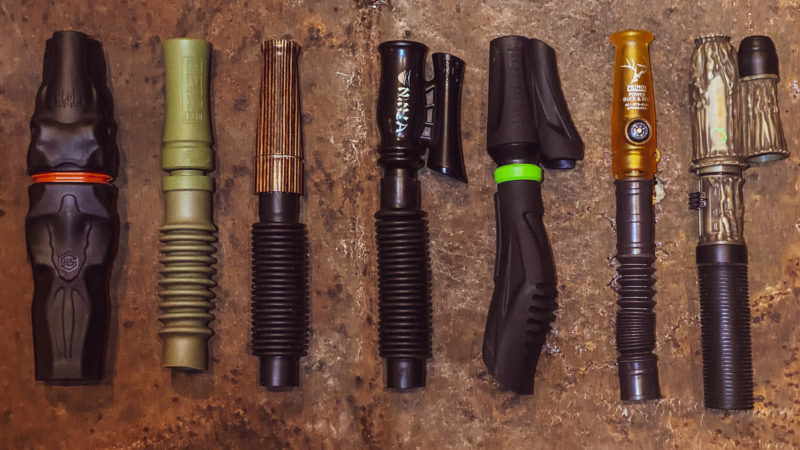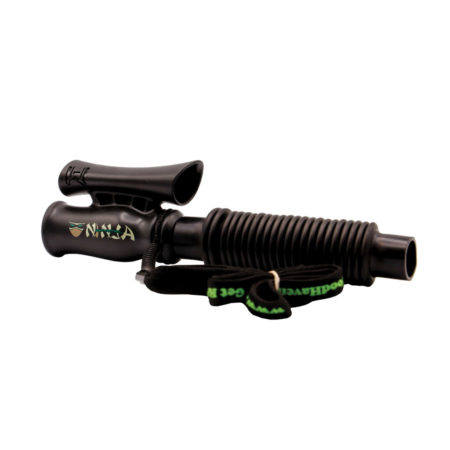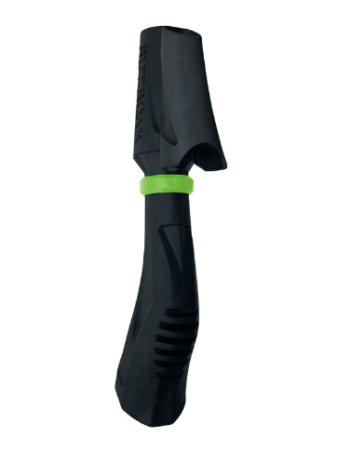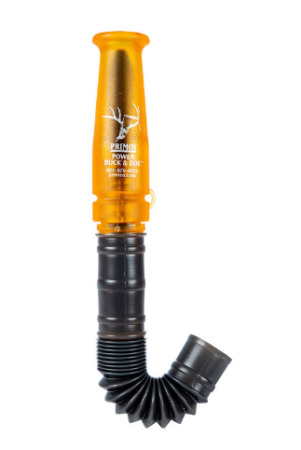
When used properly, grunt calls are a great way to draw big bucks within shooting
range.
Five of the last ten bucks I’ve shot at came within bow range for only one reason;
I used a grunt call. In 1997 alone, I shot three bucks and every one of them was
passing out of range until it heard those guttural tones from my tree. Under the
right conditions, calling has the power to increase your chances for success by
as much as 50% - during the last four seasons it has done that for me. That’s a
whopping jump for doing nothing more than carrying an inexpensive tube and blowing
through it every once in a while.
I’m reluctant to call blindly, but I have a friend who’s not. Larry sets up his
stands in fairly open areas where he can see as much ground as possible. He wants
to see as many bucks as possible with the intention of then calling them in. He
calls loudly and often, even if he hasn’t seen deer. At least 75% of the shots Larry
has taken during the past five years have been at bucks that came in to the call.
All the other guys I routinely hunt with also make heavy use of calls.
If you’re willing to work tirelessly in the backyard this summer you can extend
your bow’s maximum range by 10 yards. But, by simply using a deer call properly
you can extend your maximum reach by at least 100 yards.

You can’t expect a monster buck to come running every time you blow a grunt call,
but they can certainly up your odds.

Used in conjunction with rattling to simulate a buck fight, grunting can be even
more effective.

Calling too much can educate your local deer herd and reduce its effectiveness.

When hunting larger tracts of land you can afford to call more often, upping your
chances at a mature buck.

Grunting at a buck that’s headed away from your stand can turn him around, or it
can scare him off.

Rattling antlers do have on distinct advantage over grunt calls – they’re louder.

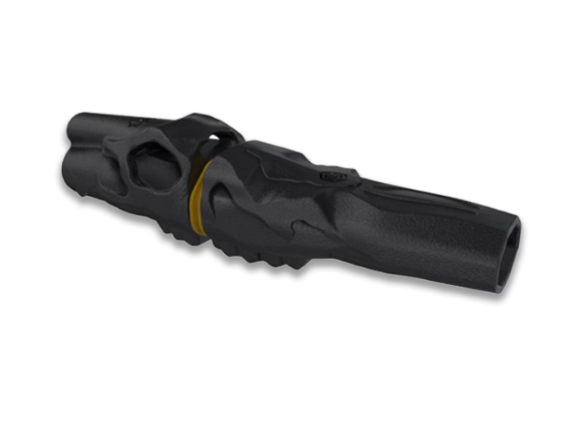
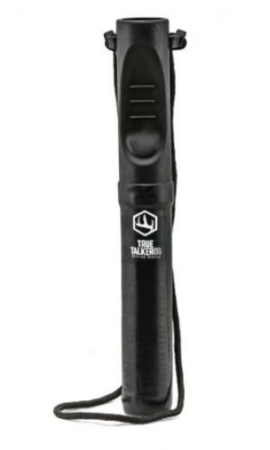
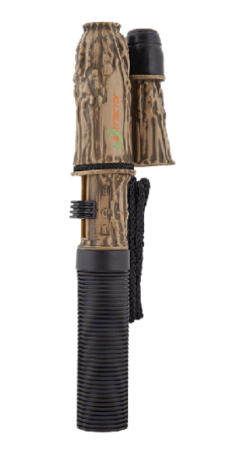
A good grunt call like the
HS True Talker won’t lose its deep tone when blown loudly,
allowing you to grunt at bucks further away or in windy conditions.

When rattling, smack the antlers together hard when you start your sequence in order
to get the attention of any bucks within hearing range.
You can’t expect mature bucks to come running every time you toot a grunt call or
crack a set of antlers together. There are only certain situations when calling
will work. I grunt at every shooter buck that I see passing out of range regardless
of the time of the season. Overall, I’d say about 10% actually end up coming within
bow range. To further break down the response rate, I’ll classify calling situations
into three categories. First, consider the bucks that are just moseying through
the woods. I can turn nearly all of them with a simple grunt, and I’d guess that
about 40 to 50% end up coming all the way in.
The second category could be called “mission impossible”. When a buck is with an
obviously hot doe I’ve never pulled him even one step in my direction. You can usually
tell them right away. There’s no chasing, they are simply paired off and moving
together. Then there are the third and fourth categories: bucks that are alone but
seem to have a destination and bucks that are with does that don’t seem to be in
estrous yet. These deer won’t come in immediately, but may come and check you out
later. I’d give this group about a 5 to 10% chance of responding. During the rut
is very possible to encounter bucks in all four groups in one day.
One morning in early November I was hunting a stand near a bedding area when I spotted
a pretty good buck in the distance. I tried grunting him over but he had other places
in mind and only stopped for a few seconds to look my way. I probably grunted a
total of four times at him – all fairly loud. Within five minutes I had three other
bucks that I would guess were aged 2 ½ to 4 ½ years within bow range of my stand.
They converged from different directions and met for a stare down within 30 yards
of my stand.
They milled around for a few minutes before finally drifting their separate ways
again. One of the bucks was too small to shoot and the other two were spared that
day because it was early in the rut and I didn’t want to stop hunting. Coincidentally,
two weeks later I shot one of them from the same stand as he followed a doe past.
Almost an hour after the bucks dispersed, the one I had originally called to came
sneaking in. He was very alert and obviously looking for the source of the sound.
He too turned out to be good but not good enough. That morning was very exciting
and very enlightening.
The original buck remembered the call and when his mission was over, whatever it
was, he naturally drifted over to check things out. I’ve also had bucks that were
chasing does come in well after the fact, too. Remember, most things don’t happen
fast in a whitetail’s world. An hour is nothing to them. I’ve seen deer stand in
one place chewing their cuds for a lot longer than that. Stay alert at all times,
just because a buck doesn’t come in right away doesn’t mean he isn’t going to come
in at all.
Before you start to compare your success rate to mine and come to the conclusion
that I’ve been sniffing Fletch-Tite, let me qualify my statistics by saying that
I hunt areas that receive some hunting pressure by other bowhunters but not a tremendous
amount. Some of the deer I hunt have surely become educated to the fact that not
all calls come from deer, (one of the reasons I don’t like blind calling) but the
call-leery are in the minority. If you hunt in areas that receive a lot of hunting
pressure you’re calling success rates will be lower than mine, but they will be
better than zero. As little effort as it takes to blow into a grunt call, even a
5% call-in rate is worth the trouble.
Like anything else you do in the woods; you can go overboard and call too much.
The result is educated deer and more difficult hunting. In the example I presented
earlier, when those three bucks came to my calling any one of them, or all of them,
could easily have spotted me or smelled me and been wary of my stand for the rest
of the season. I ended up shooting one of them later and that never would have happened
had he busted me.
Anytime you call attention to yourself in the woods you take a risk. The buck that
responds is going to come in looking for the source of the sound, and don’t forget
that source is you. In other words, he’s looking for you. They get old by learning
to play the cat and mouse game very well.
Calling deer definitely presents a tradeoff. The more you call, the more deer you
will educate. It is that simple. In the process you may also take a buck you like,
but you run the very real risk of educating him first and never seeing him again.
Or, he may respond to your calls by circling downwind through thick cover or behind
some terrain and you may never even know you educated the biggest buck in the woods.
I know successful hunters who call every half hour, but they hunt big pieces of
property with little hunting pressure. They can move around a lot and keep their
stands in areas with fresh deer. If you hunt a small property, you can’t afford
to draw that kind of attention to your best stands.
The fear of educating bucks is why I only call to deer I’ve already seen. It is
a kind of last resort strategy. If he’s a shooter I’ll do anything I can to bring
him within range. Since I can see him I have better control over the situation.
But, if he’s not a shooter I won’t make a sound. In fact, I’ll be sitting there
hoping he doesn’t come anywhere near me. It’s just never a good idea to educate
deer even if they aren’t deer you want to shoot.
This section is based on my opinions and my overall desire not to carry the kitchen
sink into the woods each day. My way is probably not the best way. Now that I’ve
said that, I can come clean; I don’t carry rattling antlers. They’re cumbersome
and they clank around. Since I don’t do any blind calling, I figure I have just
as much chance of calling a buck in with the grunt call as I do with antlers. Besides,
grunting is much less aggressive and is less likely to scare a buck off. It will
also work during any part of the season.
Sure, there are probably some bucks out there that will come to antlers that won’t
come to a grunt call, but I’m not convinced it is worth the hassle of carrying the
antlers. I’ve tried rattling bags and boxes, but with them I loose the one inherent
advantage that rattling possesses. Rattling is louder than grunting – or least it
can be when using antlers – so the sound carries farther through the woods. Volume
is an advantage if the buck is a long ways off or if the wind is blowing. I select
grunt calls that don’t loose tone when I blow them hard, so I can reach many of
these deer anyway.
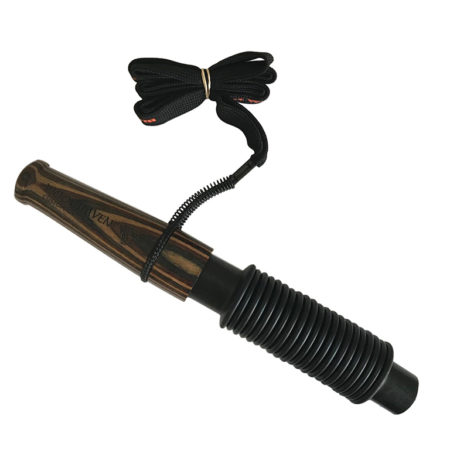
Using a modern grunt call is easy. They are so well made that it takes almost no
experience to produce lifelike big buck noises. I have never believed that you have
to do anything fancy to attract a buck with a grunt call. You will call in just
as many bucks with a simple three to five-grunt sequence as you will with any of
the more trendy techniques. I like the advice of Lohman’s Brad Harris, “Keep things
simple. Volume and rhythm are the keys to good calling.”
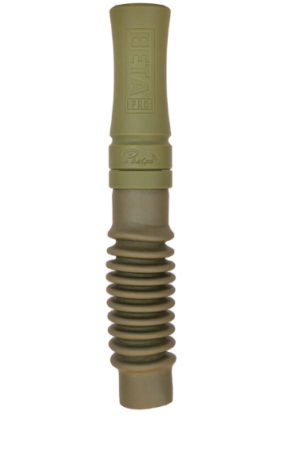
When selecting a grunt call I look for two things, lots of range and a guttural
tone. By range, I mean the call should produce proper tones whether blown loudly
or softly. Some calls “blow down” when you put a lot of force into the call. These
calls are fine for close-range work but limit your ability to reach out to more
distant targets. A good grunt call will take a volume of air similar to what you
expel when coughing without locking up.
I choose slightly more guttural calls because they sound good to me. About 10 years
ago I was hunting a ridge overlooking a small hog lot. Anyone who’s been around
hogs much knows that they oink deep and guttural. Every time a pig sounded off my
brain immediately equated it to a buck grunt – at a couple hundred yards they sound
almost identical. The lesson was reinforced a few days later when a 2 ½ year old
buck came past my stand grunting. The sound was so guttural it sounded like he would
upchuck at any moment. But, that’s mostly personal taste; other sounds will work
too.
Real buck grunts run the gamut of tone and duration. Some are so distinctive you
can recognize the author by his grunt without ever seeing him. There was a buck
on one of my hunting areas for three years that several of us heard but no one saw
until the third year. He sounded like a chainsaw starting up when he grunted. It
was more like a roar or bugle and lasted for about six to eight seconds. The timber
echoed with that awful sound every time he cut loose. We figured he must be some
kind of world-beater to carry on like that. Finally, two of my friends saw him bugling
on the same day. He was a mature buck all right, but he had a withered rack and
a broken down old body. He’d apparently been roaring around those parts for a long
time. He must of died of old age because we haven’t heard him for two seasons.
There was another buck I hunted for the better part of two weeks during the ‘99
season. He didn’t really grunt as much as he clicked. He’d string about 20 to 30
distinctively punctuated clicks together in a low-pitched drone that lasted upwards
of ten seconds. It caused the hair on the back of my neck to rise whenever it drifted
up the darkening creek bottom where I hunted him. If you’ve ever seen the Schwarzenager
movie “Predator” you’ve heard it. It’s the sound the beast made. I almost arrowed
that buck one evening but he got lucky and turned to chase a doe just as he was
getting close enough for the shot. A gun hunter killed him after the bow season
and he had a 165-inch 10-point rack. That one hurt.
My point is this: there is no such thing as the perfect tone for a grunt call. Some
hunters believe they should sound like an immature buck so as not to intimidate
anyone. Well, I’ve heard a lot of immature bucks that sounded pretty tough and I’ve
heard a lot of stud bucks that sounded a bit wimpy. Focus on volume and a good raspy
tone and you will call in as many bucks as anyone.
Nothing I carry short of the tree stand and the bow have the power to increase my
odds more than a simple grunt call. If you aren’t making full use of this important
tool you’re not taking your fair share of big bucks.
Stan Potts, of central Illinois, loves to rattle and has called in some monster
bucks through the years. In fact, Stan's personal best, a huge 11 pointer that netted
195 5/8 points as a typical, was rattled-up back in 1983, at a time when few hunters
outside of Texas were calling deer. Here are Stan's tips for rattling from a tree
stand.
- Smack the horns together hard when you start a sequence just to get the attention
of any bucks within hearing range.
- Rattle for about 1 1/2 minutes and then quickly hang the horns up and grab your
bow.
- Wait 15 minutes and then rattle for another 30 seconds. Stan then waits another
hour before starting another sequence.
- Rattle at intervals all day long while you're on stand, and keep a grunt call handy
to call to bucks that hang up out of range.
Stan admits that his success rate is not high. "I call in a buck maybe one out of
every 15 to 20 times that I rattle," he said. "Most of those are subordinates, but
every once in awhile I'll bring in a real dandy. I also like to rattle to deer that
I see passing out of range because I feel rattling can be heard farther away than
grunt calls."
Hunting video company Stoney-Wolf Productions is offering a fun way to learn big
game calling. They sell a CD that allows you to listen to lessons and then compare
your calls to those of actual animals or veteran game callers. Your computer needs
a sound card, speakers and a microphone (nearly all modern computers have these).
Your call is compared via visual spectrograph to that of the experts and you are
scored based on similarity of sound and sequence. It’s a fun learning system that
teaches grunt calls, bleat calls and rattling sequences as well as the calls of
other big game animals. For more information contact: Stoney-Wolf Productions, Dept.
PB, 124 Columbia Court, North Chaska, MN 55318 (800) 237-7583, www.gamecalltech.com